
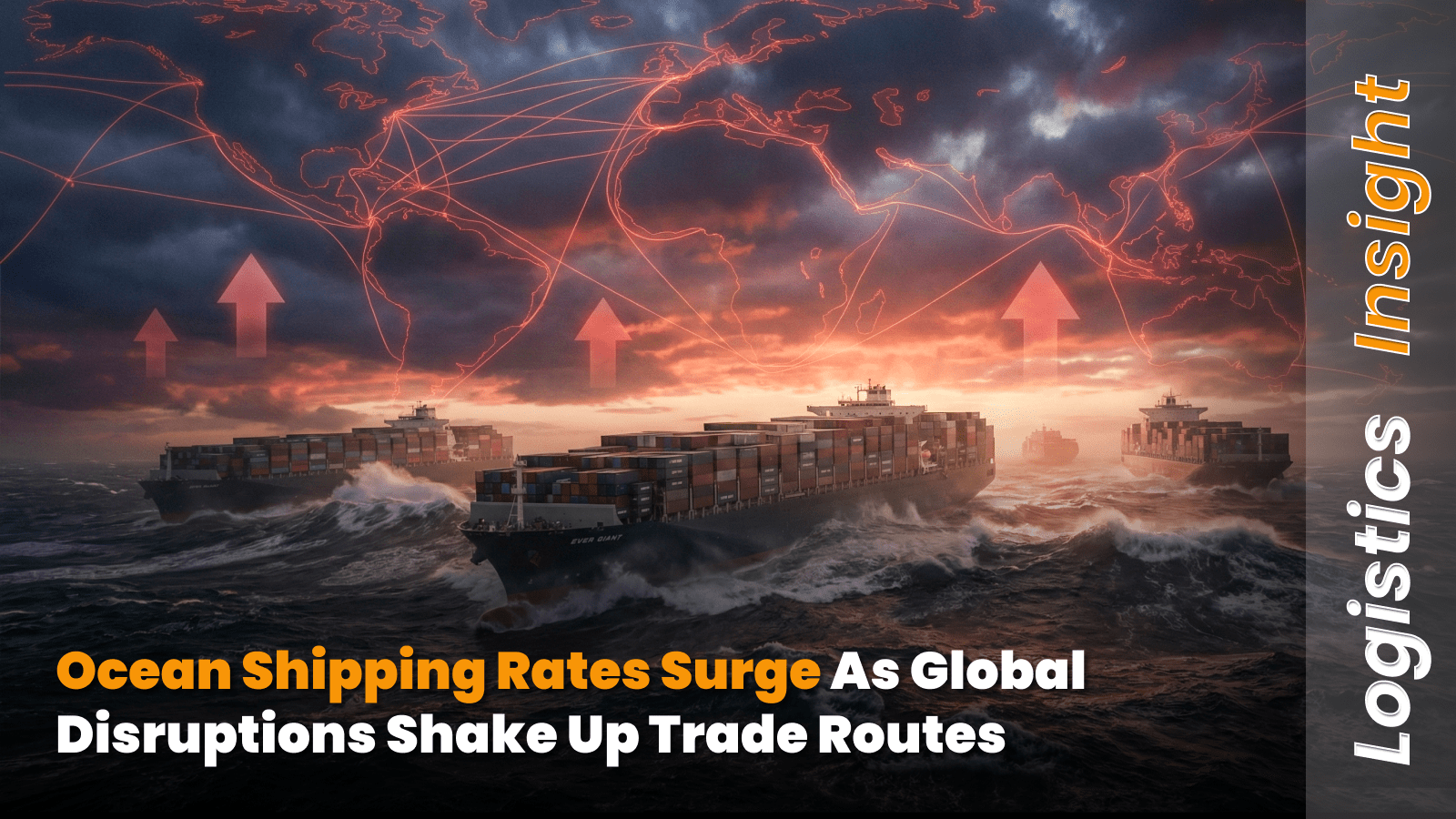
Ocean freight markets are experiencing an unusual year-end spike as geopolitical tensions, sanctions, and shifting supply patterns disrupt normal trade flows. These issues are causing ships to spend more time on the water, tightening vessel availability and pushing rates sharply higher across oil, LNG, and bulk commodity segments.
Daily earnings for crude tankers on key global routes have jumped 467%, marking the largest surge seen this year. Rates for LNG carriers and vessels hauling commodities like iron ore have also increased dramatically, in some cases doubling or more.
This trend is notable because freight prices usually decline during the final months of the year due to softer seasonal demand.
The tightness is being felt across the entire sector, and several executives anticipate these conditions will extend into early next year. As Frontline Management’s CEO Lars Barstad noted on a recent earnings call:
“We’re seeing an old-school, extremely tight physical shipping market… We’re not seeing any kind of weakness.”
Crude tanker rates have surged as Middle Eastern oil production increases and Asian buyers pivot more heavily to the region after U.S. sanctions targeted two major Russian oil companies.
At the same time, LNG shipping from the U.S. to Europe has become more expensive, reaching a two-year high. New gas export projects in North America have tied up additional LNG carriers, leaving fewer vessels available on the open market.
Dry bulk markets are also tightening. A key index for ships that carry grain, ore, and similar cargoes hit a 20-month high at the end of November. Traders expect demand to rise ahead of a major iron ore project launching in Guinea, while weather delays near China have further restricted supply.
A major factor behind rising costs is the growing threat to ships passing through the Red Sea. Attacks by Iran-backed Houthi forces in Yemen have forced many vessels to avoid the region and travel around Africa instead.
This adds thousands of extra miles to each journey, increasing “ton-miles,” a core metric that multiplies cargo volume by distance traveled. Longer routes mean fewer vessels are available at any given time, driving up rates.
Although freight prices have eased slightly from their late-November highs, the elevated costs are already influencing buying decisions. Some U.S. LNG customers have considered delaying loadings, while owners of large oil tankers are choosing longer voyages to maximize income.
In one recent case, Indian refiners had to hire two smaller tankers — instead of the typical single supertanker — because so many large vessels were committed to extended routes.
Despite enjoying their strongest earnings in years, shipping companies remain cautious. Building new vessels requires major capital, and today’s elevated freight rates could reverse quickly if additional ships enter service or if the Red Sea becomes safe again.
As Jayendu Krishna of Drewry Maritime Services explained:
“If you’re a shipowner, you have made money, you are not under distress… But you’re not in a great party like mood,” largely because future conditions remain unpredictable.


Comments are closed