
In the world of logistics, efficiency is everything. One of the often-overlooked components that can significantly impact shipping costs, space optimization, and operational flow is the standard pallet size. From freight planning to warehouse stacking, understanding pallet dimensions and specifications is essential for efficient logistics operations.
This comprehensive guide covers standard pallet dimensions, regional variations, material types, use cases, and best practices to help you streamline your supply chain.
Pallets are the foundation of freight logistics, and understanding standard pallet dimensions ensures smoother and more cost-effective operations.

For logistics professionals, having a quick pallet size reference helps simplify freight planning, warehouse layout, and international shipping preparation. While pallet dimensions vary by region and industry, several sizes have become widely accepted standards in global supply chains.
Below is a quick overview of commonly used pallet sizes around the world.
| Region | Pallet Type | Dimensions (Inches) | Dimensions (Millimeters) | Typical Use |
| North America | GMA Pallet | 48 × 40 | 1219 × 1016 | Retail, FMCG, distribution centers |
| Europe | Euro Pallet | 47.24 × 31.5 | 1200 × 800 | EU transportation and warehousing |
| International | ISO Pallet | 47.24 × 39.37 | 1200 × 1000 | Export shipping and industrial logistics |
| Asia | Square Pallet | 43.3 × 43.3 | 1100 × 1100 | Food & beverage, manufacturing |
| Australia | Standard Pallet | 45.9 × 45.9 | 1165 × 1165 | Rail and container shipping |
Understanding these pallet size standards allows logistics teams to select the most efficient pallet for both domestic distribution and international freight operations.
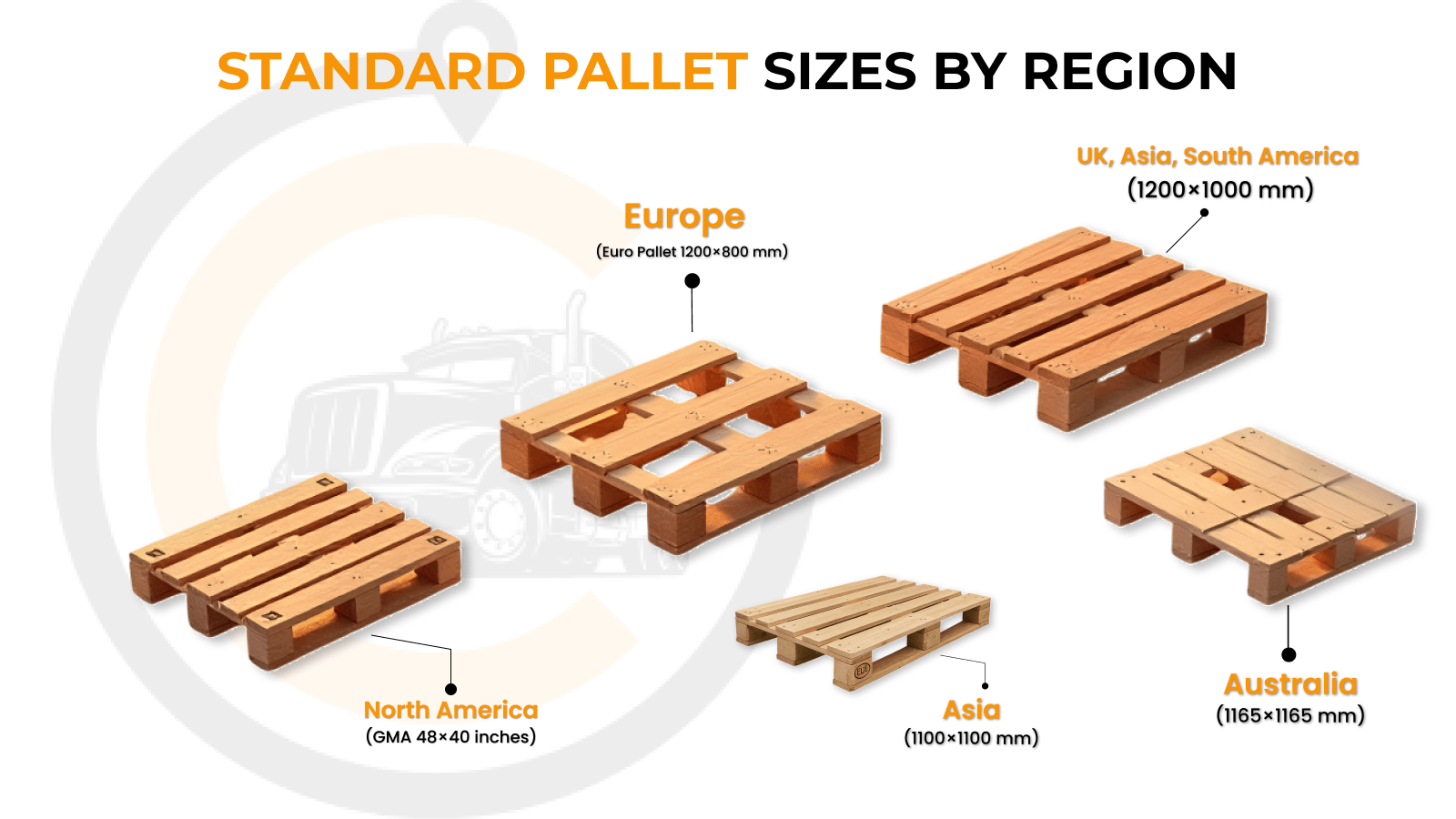
Let’s break down the typical pallet sizes used in different parts of the world and what makes them important:
Understanding these dimensions helps you choose the right pallet for international shipping and domestic distribution alike.
Different industries often prefer specific pallet dimensions depending on product type, storage systems, and transportation requirements. While global pallet standards exist, many industries follow pallet sizes that best fit their operational needs.
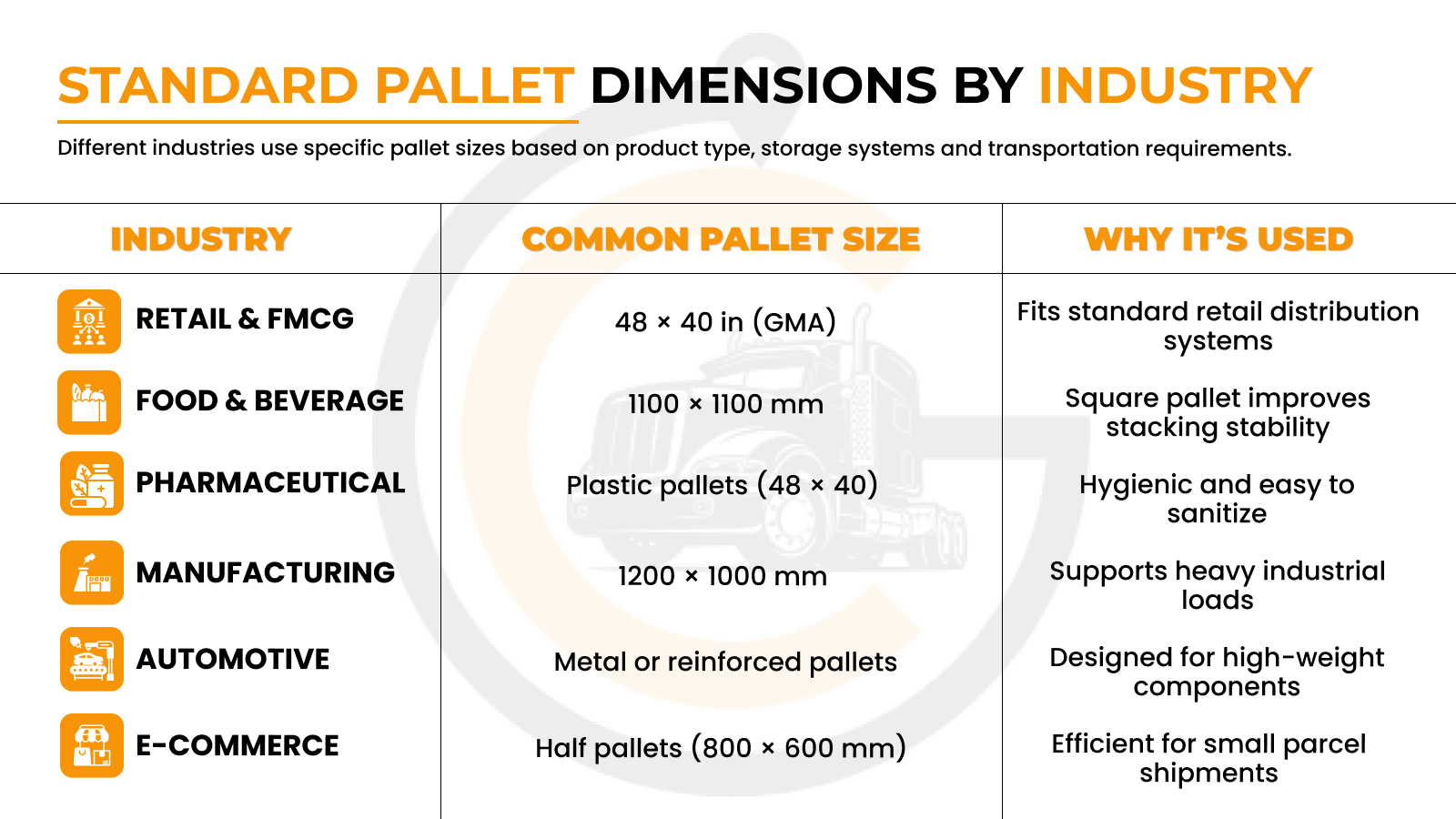
Understanding which pallet sizes are commonly used in different sectors helps logistics professionals improve warehouse organization, shipping efficiency, and product handling.
| Industry | Common Pallet Size | Reason |
| Retail & FMCG | 48 × 40 inches (GMA) | Fits standard retail distribution systems |
| Food & Beverage | 1100 × 1100 mm | Square design supports uniform stacking |
| Pharmaceutical | Plastic pallets (48 × 40) | Hygienic and easy to sanitize |
| Manufacturing | 1200 × 1000 mm | Supports heavy industrial loads |
| Automotive | Metal or reinforced pallets | Handles high-weight components |
| E-commerce | Half pallets (800 × 600 mm) | Efficient for small parcel shipments |
Each industry prioritizes pallet dimensions that align with its storage infrastructure, automation systems, and freight requirements.
For example:
By selecting the right pallet size for your industry, businesses can reduce handling errors, improve space utilization, and maintain compliance with logistics standards.
In global logistics, pallet sizes are often standardized under the ISO 6780 pallet standard, which defines the most commonly used pallet dimensions worldwide. These pallet sizes ensure compatibility with forklifts, warehouse racking systems, shipping containers, and transportation vehicles across different regions.
The most widely used ISO pallet sizes include:
| ISO Pallet Size | Dimensions | Region |
| 1200 × 1000 mm | 47.24 × 39.37 inches | Global export logistics |
| 1200 × 800 mm | 47.24 × 31.5 inches | Europe (Euro pallet) |
| 1219 × 1016 mm | 48 × 40 inches | North America |
| 1100 × 1100 mm | 43.3 × 43.3 inches | Asia |
| 1165 × 1165 mm | 45.9 × 45.9 inches | Australia |
Using ISO-compliant pallets ensures that shipments can move seamlessly through international supply chains without requiring repalletization. This standardization also helps reduce handling time, prevent cargo damage, and improve loading efficiency in containers and trailers.
Every logistics professional should understand the key components of pallet sizing:
Knowing these pallet measurements ensures accurate load planning, billing, and safer material handling.
Not all pallets are built the same. Pallet design plays a critical role in load stability, forklift accessibility, and warehouse storage efficiency. The most common pallet designs used in logistics include:
1. Block Pallets
Block pallets use solid blocks between the top and bottom deck boards instead of stringers. This design allows forklifts and pallet jacks to enter from all four sides, making them highly versatile for warehouse operations.
Advantages:
Block pallets are commonly used in Europe and international logistics where flexibility and durability are important.
2. Stringer Pallets
Stringer pallets are the most common pallet design in North America. They use three parallel boards (stringers) to support the top deck boards.
Advantages:
However, traditional stringer pallets usually provide two-way forklift entry, unless the stringers are notched to allow four-way access.
3. Double-Face Pallets
Double-face pallets have deck boards on both the top and bottom surfaces. These pallets are stronger and distribute weight more evenly.
Advantages:
They are commonly used in manufacturing, heavy equipment transport, and automated warehouse systems.

The material of your pallet can influence its strength, cost, and suitability for certain industries:
Selecting the right pallet material directly affects handling costs and operational efficiency.
Pallet weight can vary depending on the material, construction design, and structural strength. Knowing the weight of a pallet is important when calculating shipping costs, freight classifications, and container weight limits.
Below are typical pallet weight ranges:
| Pallet Type | Average Weight |
| Wooden pallet | 30 – 70 lbs (13 – 32 kg) |
| Plastic pallet | 15 – 50 lbs (7 – 23 kg) |
| Metal pallet | 100+ lbs (45+ kg) |
Wooden pallets tend to be heavier because of the solid timber used in their construction, while plastic pallets are often lighter and designed for reuse in closed-loop supply chains.
Understanding pallet weight helps logistics professionals calculate total freight weight more accurately and avoid unexpected carrier surcharges.
Not all pallets are built the same. Here’s how load capacity varies:
For example:
Understanding load type helps logistics professionals select the right pallet and prevent structural failure during transit or storage.
1. Freight Pricing
Most freight carriers charge by dimensional weight, which includes your product plus the pallet. Overestimating or underestimating size leads to costly adjustments.
2. Warehouse Efficiency
Standard sizes allow you to:
3. International Container Loading
Using standard pallets ensures you can fit maximum units inside containers—reducing your per-unit shipping cost. For example:
That’s why pallet size standardization plays a key role in logistics design.
Efficient container loading plays a crucial role in reducing shipping costs and maximizing freight capacity. Understanding container pallet layout helps logistics professionals plan shipments more effectively, minimize unused space, and improve loading efficiency. The number of pallets that can fit inside a shipping container depends on pallet dimensions, container size, pallet orientation, and the stacking height of the cargo.
Below is a general guideline showing how many pallets typically fit inside common shipping containers and trailers.
| Container Type | Euro Pallets (1200 × 800 mm) | GMA Pallets (48 × 40 in) |
| 20 ft container | 11 | 10–11 |
| 40 ft container | 23–24 | 20–21 |
| 53 ft trailer | — | 26 |
These figures may vary slightly depending on the arrangement of pallets, the type of cargo, and whether additional stacking is possible. Proper pallet alignment within the container ensures better weight distribution and safer transportation.
When loading freight into containers, businesses typically choose between floor loading and palletized loading, depending on the type of goods being transported.
Floor Loading
In floor loading, goods are placed directly onto the container floor without using pallets. This method maximizes the use of available container space because cartons can be stacked tightly together. Floor loading is often used for lightweight packaged goods and high-volume shipments where maximizing cargo capacity is the primary goal.
However, this method can increase loading and unloading time because each carton must be handled individually.
Palletized Loading
Palletized loading involves placing products on pallets before loading them into the container. Although pallets slightly reduce the total number of items that can fit inside the container, they significantly improve handling efficiency. Forklifts and pallet jacks can quickly load and unload palletized shipments, saving time and reducing labor costs.
Palletized freight also improves cargo protection, keeps goods organized during transit, and simplifies warehouse operations.
A well-planned container pallet layout ensures optimal use of space while maintaining safe handling practices and efficient freight movement throughout the supply chain.
When shipping goods internationally using wooden pallets, compliance with ISPM-15 (International Standards for Phytosanitary Measures No. 15) is mandatory. This regulation was introduced to prevent the spread of pests and insects through untreated wood packaging materials.
Under ISPM-15 regulations, wooden pallets must undergo heat treatment to eliminate harmful organisms.
Key requirements include:
Plastic, metal, and composite pallets are exempt from ISPM-15 because they do not carry the risk of pest contamination.
Failure to comply with ISPM-15 can result in shipment delays, quarantine inspections, or even cargo rejection at international borders.
Here are key guidelines to follow for efficient pallet use:
Following these pallet best practices reduces delays, improves safety, and saves money.
Even experienced logistics professionals sometimes overlook pallet selection details that can lead to inefficiencies and higher shipping costs.
Using Non-Standard Pallet Sizes
Custom pallet dimensions may seem convenient but can create compatibility issues with trailers, containers, and warehouse racks.
Ignoring Forklift Entry
Choosing pallets that do not support four-way entry can slow down loading and unloading operations.
Exceeding Load Capacity
Overloading pallets increases the risk of pallet breakage, cargo damage, and workplace injuries.
Poor Pallet Condition
Damaged or worn pallets can collapse during transit or storage, leading to product loss and safety hazards.
Inefficient Container Loading
Using pallets that do not align with container dimensions can leave unused space and increase per-unit shipping costs.
Avoiding these common mistakes helps ensure smoother logistics operations and safer material handling.
Q: What is the standard pallet size in the USA?
A: The standard U.S. pallet size is 48 x 40 inches, commonly known as the GMA pallet.
Q: What is the height of a standard pallet?
A: A typical pallet is about 6 inches tall, but this can vary slightly based on material.
Q: What is the standard Euro pallet size?
A: The Euro pallet measures 1200 x 800 mm and is ISO compliant for use across the EU.
Q: Can I use plastic pallets for export?
A: Yes. Plastic pallets don’t require heat treatment and are ideal for international shipping.
Q: Are there smaller pallet sizes?
A: Yes. Half-pallets (800×600 mm) and quarter-pallets (600×400 mm) are commonly used for retail, e-commerce, and compact shipping.
Mastering standard pallet size and dimensions is more than just a technical requirement—it’s a strategic advantage. Whether you’re managing a warehouse, coordinating freight, or planning international shipments, knowing the right pallet size standard helps reduce costs, improve safety, and enhance efficiency.
Take the time to understand the sizes, materials, and load capacities relevant to your region and industry. It’s a small step with a massive impact on your logistics performance.



Comments are closed