
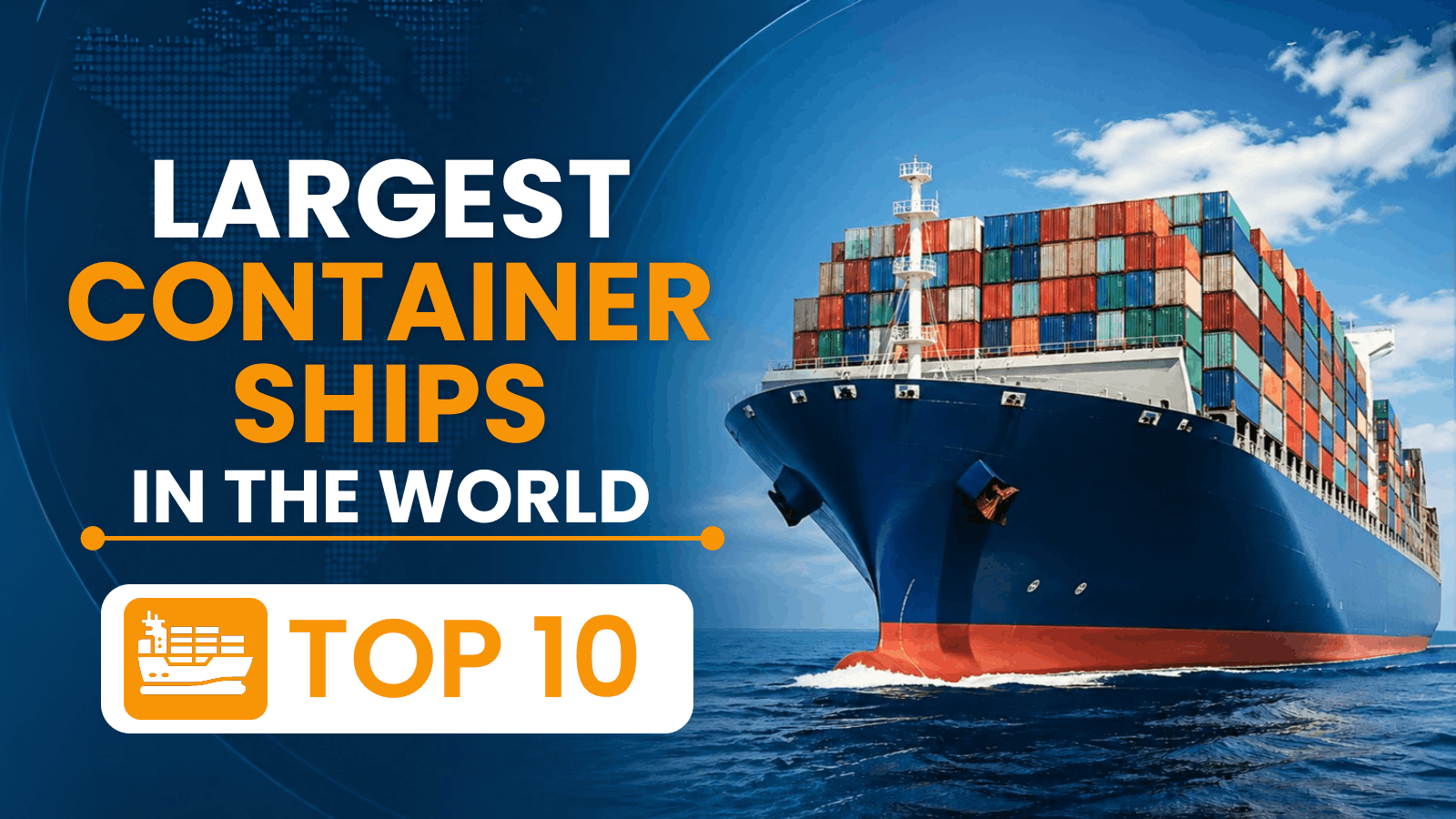
In today’s hyper-connected global economy, container ships are the silent force moving the world forward. From the smartphone in your hand to the furniture in your home, a significant portion of everyday goods has likely traveled across oceans inside a steel container.
Over the past few decades, these vessels have evolved dramatically not just in size, but in capability, efficiency, and technological sophistication. What was once considered a large cargo ship is now dwarfed by today’s ultra-large container vessels (ULCVs), engineered to carry staggering volumes of cargo in a single journey.
These modern shipping giants are not built simply to be bigger; they are designed to optimize cost, maximize capacity, and streamline global trade at an unprecedented scale.
This leads to an important question:
How big is the largest container ship in the world and what’s driving the industry toward even larger vessels?
In this guide, we’ll break down everything you need to know from the world’s largest and longest container ships to the economic and technological forces shaping their future.
A container ship, also known as a container vessel, is a large cargo ship specifically designed to transport goods in standardized containers across oceans. These containers commonly seen on trucks and trains allow cargo to be easily loaded, unloaded, and transferred between different modes of transportation without unpacking the contents.
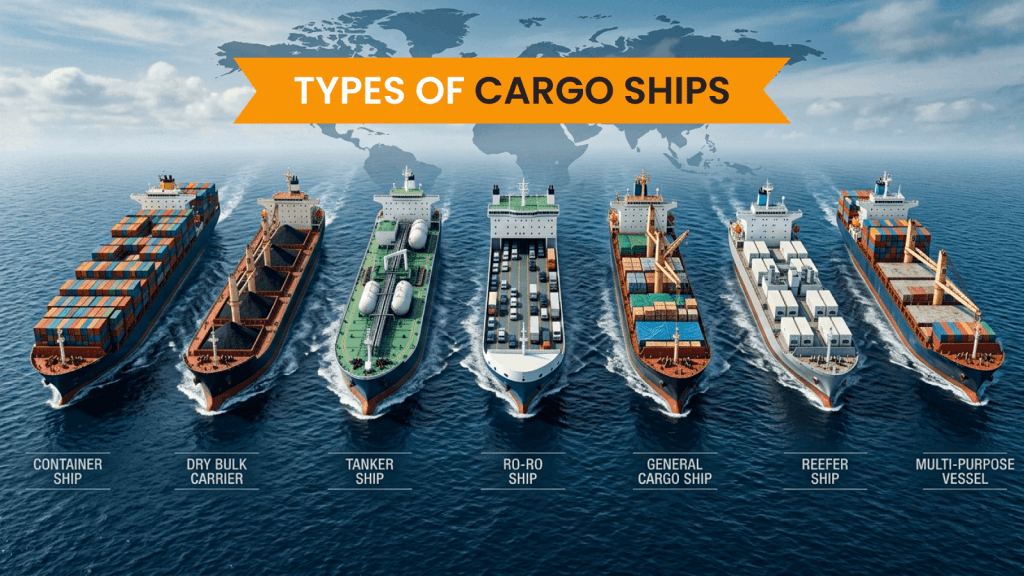
This system, known as containerization, has transformed global trade by making shipping faster, more efficient, and significantly more cost-effective.Container ships are just one category among different types of cargo ships, each designed to transport specific kinds of goods.
Container ships carry thousands of metal boxes stacked both below and above the deck. Each container typically measures 20 or 40 feet in length and is used to transport a wide range of goods, including electronics, clothing, machinery, and food products. These standardized units come in different formats and understanding the types of shipping containers helps businesses choose the right option for their cargo.
The journey usually follows a structured process:
This seamless system is the invisible engine behind global trade, powering everything from your online orders to supermarket shelves.
If you’re new to the industry, learning key essential logistics terms can help you better understand how global shipping operates.
One of the most important terms in container shipping is TEU (Twenty-foot Equivalent Unit).
A TEU is a standard unit used to measure a ship’s cargo capacity:
For example, the mega container ships can carry more than 24,000 TEUs, meaning they can transport over 24,000 standard containers in a single journey.
Container ships are categorized based on their size and capacity:
These categories reflect how the shipping industry has continuously evolved to meet growing global demand.
When people search for terms like “biggest ship in the world”, “largest vessel”, or “longest container ship,” they often mean the same thing but in the shipping industry, these terms have very different meanings.
Understanding this distinction is important, especially when comparing modern container ships and ranking the largest ships in the world accurately.
In shipping, the term “largest” usually refers to cargo capacity, which is measured in TEUs (Twenty-foot Equivalent Units).
So, when we talk about the largest container ship in the world, we’re referring to the ship that can carry the most containers, not necessarily the longest or heaviest.
The longest ships are measured in meters or feet from bow to stern.
While many of the largest ships are also among the longest, length alone doesn’t determine how much cargo a ship can carry.
The phrase “biggest ship in the world” is a broad, non-technical term often used in search queries.
It can refer to:
Because of this, search results for “biggest ship” often include different types of vessels, not just container ships, but also oil tankers and cruise ships.
For SEO and clarity:
Understanding these differences helps you:
As of 2026, the title of the largest container ship in the world belongs to the MSC Irina class, a new generation of ultra-large container vessels designed to push the limits of maritime engineering.
With a massive carrying capacity of over 24,000 TEUs, these ships represent the peak of modern container shipping. Built for efficiency and scale, they are capable of transporting enormous volumes of cargo in a single journey, making them some of the most important assets in global trade.
To put this into perspective, a ship of this size can carry tens of thousands of containers filled with goods ranging from electronics and furniture to clothing and industrial equipment enough to supply entire cities.
The biggest container ships in the world are not just about size they are built with cutting-edge technology to improve performance and sustainability:
These innovations allow shipping companies to move more cargo while lowering costs and minimizing their carbon footprint.
While the MSC Irina currently leads the list, several other largest vessels in the world are close behind. Below is an overview of the top contenders dominating global shipping:
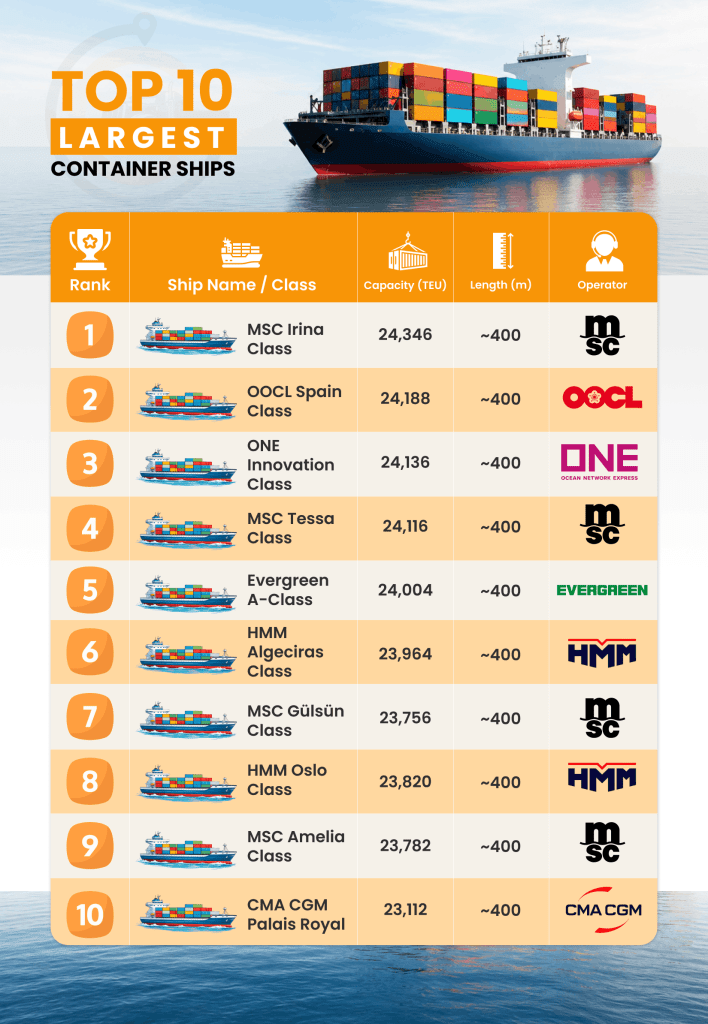
| Rank | Ship Name / Class | Capacity (TEU) | Length (m) | Operator |
| 1 | MSC Irina Class | 24,346 | ~400 | MSC |
| 2 | OOCL Spain Class | 24,188 | ~400 | OOCL |
| 3 | ONE Innovation Class | 24,136 | ~400 | ONE |
| 4 | MSC Tessa Class | 24,116 | ~400 | MSC |
| 5 | Evergreen A-Class | 24,004 | ~400 | Evergreen |
| 6 | HMM Algeciras Class | 23,964 | ~400 | HMM |
| 7 | MSC Gülsün Class | 23,756 | ~400 | MSC |
| 8 | HMM Oslo Class | 23,820 | ~400 | HMM |
| 9 | MSC Amelia Class | 23,782 | ~400 | MSC |
| 10 | CMA CGM Palais Royal | 23,112 | ~400 | CMA CGM |
The MSC Irina Class stands as the largest container ship in the world, with a remarkable capacity of 24,346 TEUs. Operated by Mediterranean Shipping Company, these vessels represent the cutting edge of maritime engineering, combining massive scale with advanced efficiency systems. Designed for high-volume trade routes, particularly between Asia and Europe, they maximize cargo capacity while maintaining optimized fuel consumption and operational performance.
The OOCL Spain Class is one of the most technologically advanced container ship classes, offering a capacity of 24,188 TEUs. Operated by Orient Overseas Container Line, these ships are equipped with smart monitoring systems and digital optimization tools that enhance route efficiency and reduce emissions, making them a strong contender in the ultra-large vessel segment.
Operated by Ocean Network Express, the ONE Innovation Class reflects the next generation of container shipping. With a capacity of 24,136 TEUs, these vessels are designed to balance scale with sustainability, integrating advanced digital technologies and efficient structural design to support the growing demands of global trade.
The MSC Tessa Class further strengthens Mediterranean Shipping Company’s position in the mega-ship category. With a capacity of 24,116 TEUs, these vessels are engineered with optimized hull designs and energy-efficient systems, enabling cost-effective operations while maintaining high cargo volumes across major shipping lanes.
The Evergreen A-Class vessels, operated by Evergreen Marine, were among the first to surpass the 24,000 TEU milestone. Known for their scale and reliability, these ships play a crucial role in long-haul international trade, offering a strong balance between capacity, performance, and fuel efficiency.
The HMM Algeciras Class marked a major leap in container ship capacity when first introduced, reaching 23,964 TEUs. Operated by HMM, these vessels are built with eco-friendly technologies and enhanced structural stability, making them both efficient and environmentally conscious in large-scale shipping operations.
The MSC Gülsün Class was a breakthrough in ultra-large container ship design, setting new industry standards at the time of its launch. Managed by Mediterranean Shipping Company, these vessels introduced higher capacity benchmarks and improved operational efficiency, paving the way for newer generations of mega ships.
The HMM Oslo Class continues HMM’s expansion in the ultra-large vessel segment, offering a capacity of 23,820 TEUs. These ships are designed with advanced fuel-saving technologies and optimized cargo layouts, enabling efficient transportation of large volumes while maintaining strong environmental performance standards.
The MSC Amelia Class is another addition to Mediterranean Shipping Company’s growing fleet of high-capacity container ships. With a capacity of 23,782 TEUs, these vessels emphasize operational efficiency, reliability, and scalability, making them ideal for handling increasing global trade demands across major shipping routes.
The CMA CGM Palais Royal, operated by CMA CGM, combines large-scale capacity with a strong focus on sustainability. With a capacity of 23,112 TEUs, it reflects the company’s commitment to innovation, including the adoption of cleaner fuel technologies and efficient ship design to reduce environmental impact while maintaining high cargo performance.
This list highlights how competitive the race has become to build the biggest freight ships in the world, with each new generation slightly increasing capacity and efficiency.
The journey of container ships is a story of rapid innovation and growing global demand.
This evolution shows how the shipping industry has continuously adapted to meet the demands of international trade. What started as modest cargo vessels has transformed into a fleet of massive container ships that power the global economy.
The rapid growth in the size of container ships is not a coincidence, it’s driven by clear economic advantages. Shipping companies are constantly looking for ways to move more cargo at lower costs, and larger vessels make that possible. Working with experienced ocean freight experts allows businesses to take full advantage of large-scale shipping efficiency.
The biggest reason behind the rise of the largest container ships in the world is efficiency.
This means companies can transport goods more cheaply, which directly impacts global trade and consumer prices.
International trade has expanded massively over the last few decades. Countries rely heavily on imports and exports, especially markets like the United States.
Modern container vessels are designed with advanced technology to improve performance:
These improvements make large ships more sustainable and cost-effective compared to older models.
While the biggest freight ships in the world offer many benefits, they also come with significant challenges.
Not all ports can handle ultra-large ships.
This limits where these ships can operate efficiently.
Certain global trade routes have physical limitations.
This impacts transit time and logistics planning.
When massive ships arrive at ports:
Efficient port operations often depend on reliable drayage services to move containers quickly from ports to inland destinations.
The United States is one of the largest importers in the world, making container shipping a critical part of its economy.
These ports have invested heavily in infrastructure to handle the largest container ships.
During global disruptions like COVID-19:
This shows how dependent the U.S. economy is on large container vessels.
Today’s largest ships in the world are powered by advanced technologies that improve efficiency, safety, and sustainability.
These technologies make modern container vessels far more efficient than older ships.
As ships grow larger, the shipping industry is also focusing on reducing environmental impact.
The goal is to create greener and smarter container shipping systems that balance efficiency with environmental responsibility. Sustainable logistics also includes temperature-sensitive transport through reefer freight services.
FAQs About Container Ships
The largest container ship currently is the MSC Irina class, with a capacity of over 24,000 TEUs.
Modern ultra-large container ships can carry more than 24,000 containers.
TEU stands for Twenty-foot Equivalent Unit, a standard measure of cargo capacity.
Most of the largest container ships are 400 meters long.
They are built to reduce costs, improve efficiency, and meet growing global trade demand.
The rise of the mega container ships reflects the growing demands of global trade and the need for efficiency in logistics. These massive vessels are not only engineering marvels but also essential to the movement of goods across continents.
As technology continues to evolve, we can expect even larger, smarter, and more environmentally friendly ships in the future. For countries like the United States, these vessels will remain a critical part of the supply chain, ensuring that goods reach businesses and consumers efficiently.


Comments are closed