
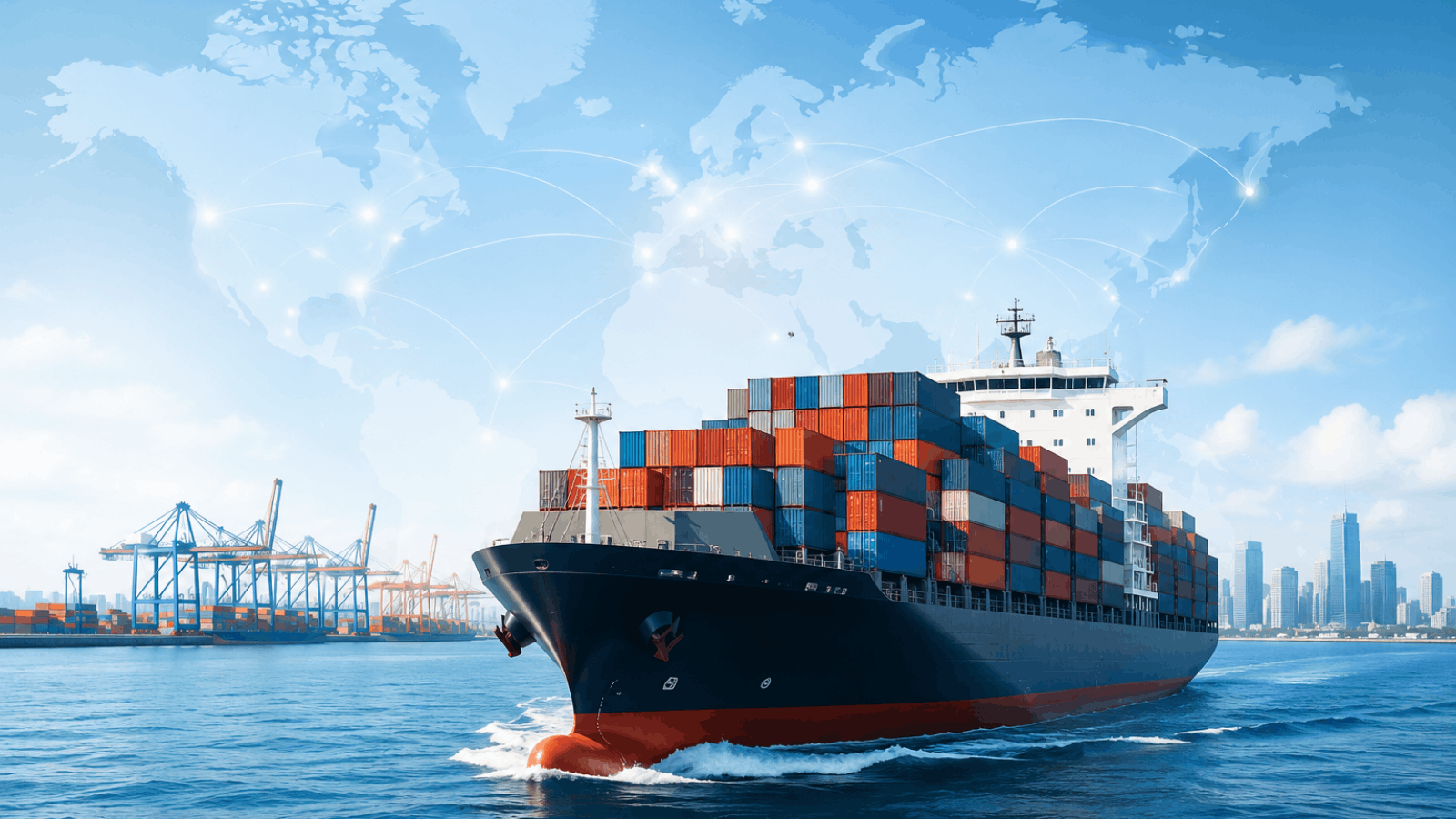
The global shipping industry is the backbone of international trade, moving everything from electronics and automobiles to food products and industrial equipment across continents every single day. Today, more than 80% of global trade by volume is transported through maritime shipping, making container carriers one of the most critical pillars of the world economy.
Over the past decade, the shipping sector has evolved far beyond simply transporting cargo from one port to another. The world’s largest shipping companies now operate massive global logistics networks, advanced digital tracking systems, smart ports, and environmentally focused fleets powered by LNG and alternative fuels. These companies influence global supply chains, freight rates, import-export operations, and even economic stability across major markets.
As of 2025–2026, the container shipping market continues to be dominated by a handful of industry giants. Mediterranean Shipping Company (MSC) currently leads the global rankings with more than 20% market share and over 6.6 million TEU capacity, followed by major players like Maersk, CMA CGM, COSCO Shipping, and Hapag-Lloyd. Together, the top shipping lines control a significant portion of worldwide container trade and operate thousands of vessels across hundreds of international ports.
The industry has also undergone major changes in recent years. From pandemic-driven supply chain disruptions and rising freight rates to new environmental regulations and digital transformation, shipping companies are rapidly adapting to a more competitive and sustainability-focused future. Strategic alliances such as the Ocean Alliance and THE Alliance, along with major acquisitions and mergers, have further reshaped the competitive landscape.
In this guide, we’ll explore the largest shipping companies in the world in 2026, based on fleet size, TEU capacity, market share, global coverage, and financial performance. We’ll also look at key industry trends, major alliances, sustainability initiatives, and the future of global container shipping.
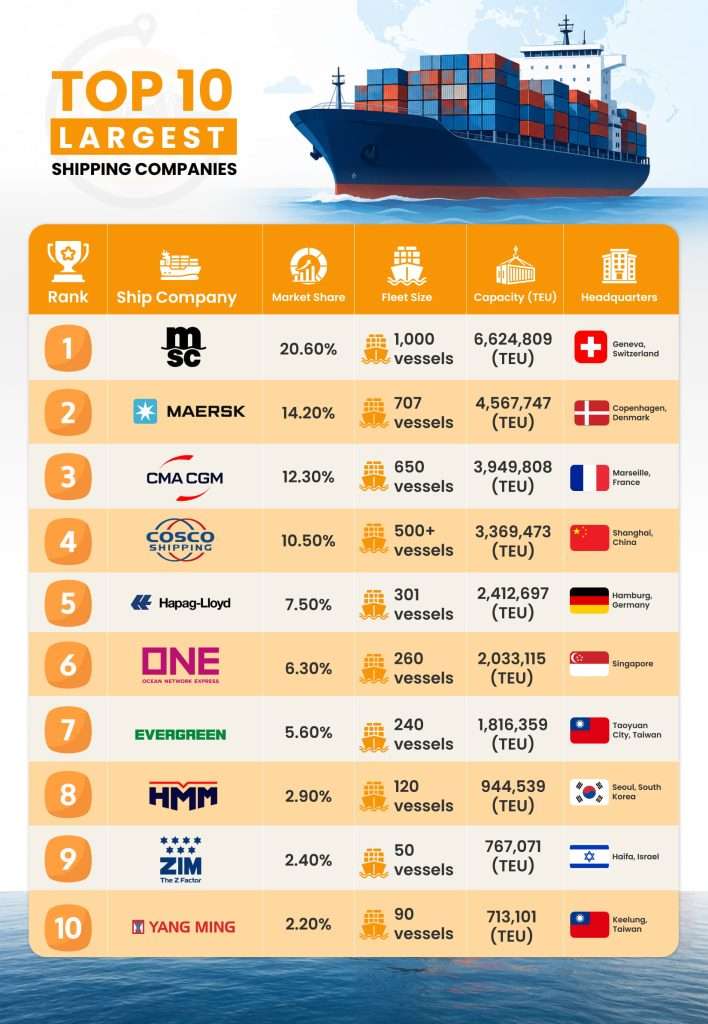
The table below highlights the top 10 largest shipping companies in the world in 2026 based on market share, fleet size, and TEU (Twenty-foot Equivalent Unit) capacity. These companies dominate global container trade and collectively control a major share of international maritime logistics.
|
Rank
|
Shipping Company
|
Market Share
|
Fleet Size
|
TEU Capacity
|
Headquarters
|
| 1 | MSC | 20.60% | 1000 vessels | 6,624,809 TEU | Geneva, Switzerland |
| 2 | Maersk | 14.20% | 707 vessels | 4,567,747 TEU | Copenhagen, Denmark |
| 3 | CMA CGM Group | 12.30% | 650 vessels | 3,949,808 TEU | Marseille, France |
| 4 | COSCO Shipping | 10.50% | 500+ vessels | 3,369,473 TEU | Shanghai, China |
| 5 | Hapag-Lloyd | 7.50% | 301 vessels | 2,412,697 TEU | Hamburg, Germany |
| 6 | ONE | 6.30% | 260 vessels | 2,033,115 TEU | Singapore |
| 7 | Evergreen Marine | 5.60% | 240 vessels | 1,816,359 TEU | Taoyuan City, Taiwan |
| 8 | HMM | 2.90% | 120 vessels | 944,539 TEU | Seoul, South Korea |
| 9 | ZIM | 2.40% | 50 vessels | 767,071 TEU | Haifa, Israel |
| 10 | Yang Ming | 2.20% | 90 vessels | 713,101 TEU | Keelung, Taiwan |
The rankings clearly show how MSC continues to dominate the global container shipping market with the largest fleet and highest TEU capacity worldwide. Meanwhile, companies like Maersk, CMA CGM, and COSCO continue to expand their global influence through strategic alliances, digital transformation, and sustainability investments.
What Is TEU in Shipping?
TEU stands for Twenty-foot Equivalent Unit, a standard measurement used in the shipping industry to calculate container capacity and cargo volume. In simple terms, 1 TEU represents one standard 20-foot shipping container.
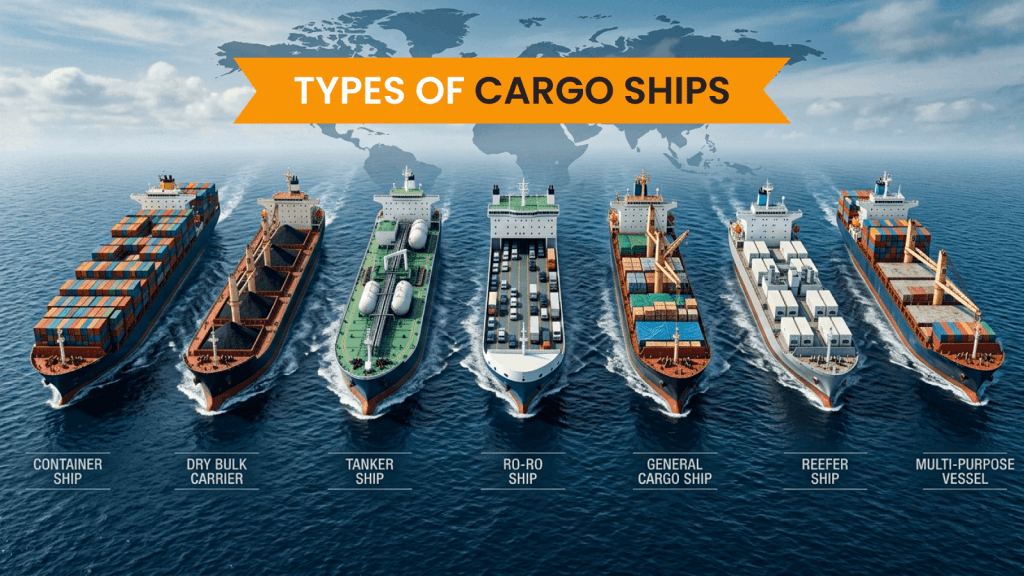
Different vessel categories across the shipping industry handle specific cargo types, from container vessels to tankers and bulk carriers. Understanding the Types of Cargo Ships helps businesses choose the right transportation method for global trade:
Because container ships carry thousands of containers of different sizes, TEU provides a universal way to compare vessel capacities across the global shipping industry.
Why Is TEU Important in Shipping?
TEU is one of the most important metrics in maritime logistics because it helps determine how much cargo a ship can carry. The higher the TEU capacity, the larger the vessel and the greater its cargo-carrying capability.
For example:
Today, the world’s largest shipping companies compete heavily based on total TEU capacity because it directly impacts operational scale, profitability, and global market reach.
Real-Life Example: What Does a 24,000 TEU Vessel Mean?
When a shipping company says a vessel has a capacity of 24,000 TEU, it means the ship can carry approximately:
These mega container ships are among the largest moving structures on Earth and are primarily used on high-volume trade routes such as Asia–Europe and Transpacific shipping lanes.
For perspective, some of the largest shipping companies like MSC, Maersk, and CMA CGM operate ultra-large vessels exceeding 20,000 TEU as part of their global fleets.
Difference Between Fleet Size, TEU Capacity, and Market Share
These three terms are often confused, but they measure completely different aspects of a shipping company’s scale.
| Metric | Meaning | Example |
| Fleet Size | Total number of vessels operated by a company | MSC operates around 1,000 vessels |
| TEU Capacity | Total cargo-carrying capacity of all ships combined | MSC has over 6.6 million TEU capacity |
| Market Share | Percentage of global container shipping controlled by the company | MSC holds around 20.6% market share |
A company may have:
For example, MSC leads the industry not just because of fleet size, but because of its massive overall TEU capacity and extensive global network.
The global shipping industry has changed dramatically since 2020. What began as a pandemic-driven supply chain crisis quickly turned into one of the most profitable periods in container shipping history.
As global demand surged during COVID-19, ports became congested, containers ran short, and freight rates climbed to record highs. Major carriers like Maersk, CMA CGM, COSCO, and Evergreen reported billions in revenue and profit as shipping capacity struggled to keep up with global trade demand.
But the boom didn’t last forever.
By late 2023, freight markets began stabilizing. Shipping rates cooled, consumer demand normalized, and profitability across the sector declined from pandemic-era peaks. Companies shifted focus from rapid expansion to operational efficiency, cost control, and long-term resilience.
At the same time, the industry entered a new phase of digital transformation. Shipping lines accelerated investments in AI-powered logistics, smart container tracking, automated ports, and data-driven supply chain management to improve efficiency and reduce delays.
Sustainability has also become a defining priority. Major carriers are now investing heavily in LNG-powered and methanol-fueled vessels as governments push for lower maritime emissions. Companies like Maersk and CMA CGM are leading the transition toward greener shipping operations and carbon reduction strategies.
MSC (Mediterranean Shipping Company) is currently the largest shipping company in the world by container capacity and market share. Founded in 1970 and headquartered in Geneva, Switzerland, MSC has grown from a small cargo operator into a global shipping powerhouse that dominates international container trade.
As of 2025, MSC controls approximately 20.6% of the global container shipping market, making it the industry’s clear leader ahead of Maersk and CMA CGM. The company operates an enormous fleet of around 1,000 cargo vessels with a total capacity exceeding 6.6 million TEU.
One of MSC’s biggest strengths is its unmatched global network. The company serves more than 520 ports across 155 countries, connecting major trade routes throughout Asia, Europe, North America, South America, the Middle East, and Africa. Its extensive shipping coverage allows MSC to maintain strong positioning across nearly every major international shipping lane.
MSC is particularly dominant on:
Unlike many publicly traded competitors, MSC remains privately owned, giving the company greater flexibility in long-term expansion strategies and fleet investments. Over the past few years, MSC has aggressively expanded its fleet by acquiring both new-build mega container ships and second-hand vessels, helping it surpass Maersk in total carrying capacity.
The company has also increased investments in sustainability and next-generation shipping technologies. MSC continues expanding its fleet with more fuel-efficient vessels while improving digital logistics operations and supply chain visibility for customers worldwide.
Another major industry shift involving MSC is the end of the 2M Alliance with Maersk in 2025. The alliance, originally launched in 2015, played a major role in global vessel-sharing operations for nearly a decade. Following the split, MSC has focused on strengthening its independent global network and expanding direct service offerings.
Quick Facts About MSC
| Category | Details |
| Headquarters | Geneva, Switzerland |
| Founded | 1970 |
| Market Share | 20.60% |
| Fleet Size | ~1,000 vessels |
| TEU Capacity | 6,624,809 TEU |
| Global Coverage | 155 countries |
| Ports Served | 520+ ports |
| Industry Position | Largest shipping company in the world |
Today, MSC is more than just a container carrier. It has become one of the most influential players in global logistics, helping shape the future of maritime trade through scale, expansion, and strategic global connectivity.
A.P. Moller–Maersk, commonly known as Maersk, is one of the most recognized names in global shipping and logistics. Headquartered in Copenhagen, Denmark, the company has played a major role in shaping international container trade for decades and remains the world’s second-largest shipping company by market share and TEU capacity.
As of 2025, Maersk holds approximately 14.2% of the global container shipping market and operates a fleet of 707 vessels with a carrying capacity of more than 4.56 million TEU.
Unlike many traditional ocean carriers, Maersk has evolved into an integrated logistics company that goes beyond maritime shipping. The company now offers end-to-end supply chain solutions, including:
This integrated logistics strategy has helped Maersk strengthen its position in the global supply chain industry while reducing dependence on freight rate volatility.
One of the biggest developments in recent years was the announced end of the 2M Alliance between Maersk and MSC in 2025. The alliance, launched in 2015, allowed both companies to share vessel capacity and optimize global shipping routes. Following the separation, Maersk shifted its focus toward more flexible and customer-centric logistics networks.
Maersk is also leading the industry’s sustainability transition. The company has invested heavily in green methanol-powered container ships as part of its long-term carbon neutrality goals. These next-generation vessels are designed to significantly reduce greenhouse gas emissions and support cleaner maritime transportation.
In addition to sustainability, Maersk continues accelerating supply chain digitization through:
Financially, Maersk remains one of the strongest players in the shipping industry. The company reported approximately $54 billion in revenue in 2025 with an EBIT of around $3.5 billion despite softer freight markets after the pandemic-era boom.
With operations in more than 130 countries and a workforce of over 100,000 employees worldwide, Maersk continues to play a critical role in global trade and international logistics.
Quick Facts About Maersk
| Category | Details |
| Headquarters | Copenhagen, Denmark |
| Founded | 1904 |
| Market Share | 14.20% |
| Fleet Size | 707 vessels |
| TEU Capacity | 4,567,747 TEU |
| Revenue | $54 billion |
| Global Presence | 130+ countries |
| Industry Position | Second-largest shipping company globally |
Today, Maersk is widely viewed as one of the most innovative shipping companies in the world, combining large-scale ocean transportation with digital logistics and sustainable shipping solutions.
CMA CGM Group is one of the world’s largest container shipping companies and a major force in global maritime logistics. Headquartered in Marseille, France, the company has built a strong international presence through aggressive expansion, digital innovation, and large-scale investments in sustainable shipping technologies.
As of 2025, CMA CGM holds approximately 12.3% of the global container shipping market and operates a fleet of around 650 vessels with a total carrying capacity of nearly 3.95 million TEU.
The company serves more than 420 ports across 160 countries, making it one of the most globally connected shipping lines in the industry. CMA CGM has especially strong operations across:
One of CMA CGM’s biggest competitive advantages is its early investment in LNG-powered vessels. The company has become a global leader in low-emission container shipping by introducing liquefied natural gas (LNG) ships into its fleet as part of its long-term sustainability strategy.
CMA CGM has also continued expanding beyond ocean freight through major logistics acquisitions. A key milestone was the integration of Bolloré Logistics, which significantly strengthened the company’s end-to-end supply chain and freight forwarding capabilities. This move helped CMA CGM expand deeper into:
Digital transformation is another major focus area for the company. CMA CGM has invested heavily in AI-driven logistics systems, smart container tracking, and automated shipping operations to improve efficiency and customer visibility across global supply chains.
The company also plays a major role in the Ocean Alliance, one of the largest shipping alliances in the world alongside COSCO Shipping, Evergreen Marine, and OOCL. This alliance helps member companies optimize vessel sharing, route coverage, and operational efficiency across key international trade routes.
Financially, CMA CGM remains one of the strongest performers in the shipping industry. The company reported approximately $55.5 billion in revenue in 2024 along with a net profit of around $5.71 billion, reflecting strong global demand and operational expansion.
Quick Facts About CMA CGM Group
| Category | Details |
| Headquarters | Marseille, France |
| Founded | 1978 |
| Market Share | 12.30% |
| Fleet Size | ~650 vessels |
| TEU Capacity | 3,949,808 TEU |
| Revenue | $55.5 billion |
| Global Coverage | 160 countries |
| Alliance | Ocean Alliance |
Today, CMA CGM is widely recognized as one of the most forward-looking shipping companies in the world, combining large-scale global logistics with sustainability, AI-powered shipping solutions, and integrated supply chain services.
COSCO SHIPPING is one of the largest state-owned shipping and logistics companies in the world and a major pillar of China’s global trade expansion strategy. Headquartered in Shanghai, China, the company has rapidly expanded its international presence through fleet growth, port investments, and strategic global infrastructure projects.
As of 2025, COSCO SHIPPING holds approximately 10.5% of the global container shipping market with a carrying capacity of more than 3.36 million TEU. The company operates a massive fleet of over 500 container vessels, making it one of the most influential players in global maritime transportation.
One of COSCO’s biggest strengths is its strong state-backed expansion strategy. Supported by China’s global trade initiatives, the company has expanded aggressively across Asia, Europe, Africa, and Latin America over the past decade.
COSCO also plays a key role in China’s Belt and Road Initiative (BRI), a global infrastructure and trade development project designed to strengthen international trade routes connecting Asia with Europe, Africa, and the Middle East. Through this initiative, COSCO has invested heavily in:
These investments have significantly strengthened China’s influence in global shipping and supply chain infrastructure.
Another major focus area for COSCO is smart port development and digital shipping operations. The company has introduced advanced technologies across several major terminals to improve efficiency, automation, and cargo handling capabilities.
COSCO’s smart port initiatives include:
In addition to shipping operations, COSCO has a strong presence in terminal operations worldwide. The company operates and invests in numerous port terminals globally, helping it maintain better control over supply chain efficiency and cargo movement.
COSCO is also a key member of the Ocean Alliance alongside CMA CGM, Evergreen Marine, and OOCL. This alliance allows member carriers to share vessels, optimize global routes, and improve operational flexibility across major trade lanes.
Financially, COSCO SHIPPING remains one of the strongest performers in the industry. The company reported approximately RMB 233.86 billion in revenue in 2024 along with a net profit of RMB 49.10 billion, reflecting strong operational growth and expanding global demand.
Quick Facts About COSCO SHIPPING
| Category | Details |
| Headquarters | Shanghai, China |
| Founded | 1961 |
| Market Share | 10.50% |
| Fleet Size | 500+ vessels |
| TEU Capacity | 3,369,473 TEU |
| Revenue | RMB 233.86 billion |
| Global Coverage | 145+ countries |
| Alliance | Ocean Alliance |
Today, COSCO SHIPPING is considered one of the most strategically important shipping companies in the world, combining large-scale ocean transportation with smart port infrastructure, global logistics investments, and state-backed international expansion.
Hapag-Lloyd is one of the oldest and most respected container shipping companies in the world. Headquartered in Hamburg, Germany, the company has built a strong global reputation through reliable shipping services, specialized cargo handling, and a well-established international trade network.
As of 2025, Hapag-Lloyd controls approximately 7.5% of the global container shipping market and operates a fleet of around 301 vessels with a total capacity exceeding 2.41 million TEU.
The company is particularly known for its strong Europe–Americas trade network, where it maintains a dominant presence across major Atlantic shipping routes. Hapag-Lloyd also has extensive operations connecting Europe with Asia, Latin America, North America, and the Middle East.
One of the company’s biggest competitive advantages is its expertise in transporting dangerous and specialized cargo. Hapag-Lloyd is widely recognized for handling:
Its long-standing dangerous goods division has made the company a preferred logistics partner for industries requiring strict safety and compliance standards.
A major turning point for Hapag-Lloyd came with its merger with United Arab Shipping Company (UASC) in 2016. The merger significantly expanded the company’s global fleet, strengthened its Middle East presence, and improved its competitiveness against larger shipping rivals such as MSC and Maersk.
Following the UASC integration, Hapag-Lloyd increased its operational scale and expanded access to strategic international trade routes.
The company is also an important member of THE Alliance, one of the largest global shipping alliances that includes:
Through THE Alliance, Hapag-Lloyd benefits from vessel-sharing agreements, wider route coverage, and improved operational efficiency across global trade lanes.
In recent years, Hapag-Lloyd has also focused on digitalization and sustainability initiatives, investing in:
Financially, the company reported approximately €18.63 billion in revenue in 2025 with a net profit of around €0.924 billion despite softer freight market conditions after the pandemic shipping boom.
Quick Facts About Hapag-Lloyd
| Category | Details |
| Headquarters | Hamburg, Germany |
| Founded | 1847 |
| Market Share | 7.50% |
| Fleet Size | 301 vessels |
| TEU Capacity | 2,412,697 TEU |
| Revenue | €18.63 billion |
| Global Presence | 120+ countries |
| Alliance | THE Alliance |
Today, Hapag-Lloyd remains one of the most trusted names in international container shipping, known for its operational reliability, specialized cargo expertise, and strong presence across Europe and the Americas.
Ocean Network Express, commonly known as ONE, is one of the fastest-growing container shipping companies in the world. Headquartered in Singapore, the company was officially launched in 2018 as a joint venture between three major Japanese shipping companies — Nippon Yusen Kaisha (NYK), Mitsui O.S.K. Lines (MOL), and Kawasaki Kisen Kaisha (K Line).
Despite being relatively new compared to legacy shipping giants, ONE has rapidly established itself as a major player in global container shipping. As of 2025, the company controls approximately 6.3% of the global container shipping market with a fleet of around 260 vessels and a carrying capacity exceeding 2 million TEU.
ONE operates across more than 120 countries and maintains a strong presence on major international trade routes, including:
One of the company’s biggest strengths is its technology-driven logistics strategy. Since its launch, ONE has focused heavily on digital transformation and operational efficiency to compete with older and larger shipping carriers.
The company continues investing in:
These innovations have helped ONE improve supply chain transparency and strengthen customer satisfaction across global shipping operations.
ONE is also a key member of THE Alliance alongside Hapag-Lloyd, HMM, and Yang Ming. Through this alliance, the company benefits from shared vessel capacity, optimized route coverage, and greater operational flexibility across major global trade networks.
Financially, ONE has shown impressive growth in recent years. The company reported approximately $19.23 billion in revenue during FY2024 along with a net profit of around $4.24 billion, reflecting strong market performance and improved operational efficiency.
Another factor that makes ONE stand out in the industry is its instantly recognizable magenta-colored containers, which have become highly visible across ports and shipping terminals worldwide.
Quick Facts About ONE (Ocean Network Express)
| Category | Details |
| Headquarters | Singapore |
| Founded | 2018 |
| Market Share | 6.30% |
| Fleet Size | ~260 vessels |
| TEU Capacity | 2,033,115 TEU |
| Revenue | $19.23 billion |
| Global Coverage | 120+ countries |
| Alliance | THE Alliance |
Today, ONE is considered one of the most innovative shipping companies in the industry, combining Japanese operational expertise with advanced digital logistics and rapidly expanding global shipping services.
Evergreen Marine is one of the world’s leading container shipping companies and a major force in global maritime trade. Headquartered in Taoyuan City, Taiwan, the company is widely recognized for its modern fleet, operational efficiency, and strong focus on environmentally sustainable shipping.
As of 2025, Evergreen Marine controls approximately 5.6% of the global container shipping market and operates a fleet of around 240 vessels with a carrying capacity of more than 1.81 million TEU.
One of Evergreen’s biggest competitive advantages is its young and modern fleet. Industry reports consistently rank Evergreen among the carriers operating the youngest fleets globally, which helps improve fuel efficiency, reduce maintenance costs, and support lower carbon emissions.
The company has made sustainability a core part of its long-term strategy. Evergreen continues investing in:
These initiatives are helping the company align with stricter international environmental regulations and growing global demand for greener shipping solutions.
Evergreen is also known for operating ultra-large container ships (ULCVs) that support high-volume global trade routes, especially across:
These mega vessels allow Evergreen to move large volumes of cargo more efficiently while lowering transportation costs per container.
Another major strength for Evergreen is its participation in the Ocean Alliance, one of the largest global shipping alliances alongside CMA CGM, COSCO SHIPPING, and OOCL. Through the alliance, Evergreen benefits from expanded route coverage, vessel-sharing agreements, and improved operational flexibility across international trade networks.
Financially, Evergreen Marine delivered strong results in 2024, reporting approximately $12.7 billion in revenue and around $3.4 billion in net income as global shipping demand remained stable despite softer freight rates after the pandemic boom years.
Evergreen gained worldwide public attention in 2021 after one of its vessels, the Ever Given, blocked the Suez Canal and disrupted global trade for several days. While the incident created major supply chain delays, it also highlighted the enormous scale and importance of modern container shipping operations.
Quick Facts About Evergreen Marine
| Category | Details |
| Headquarters | Taoyuan City, Taiwan |
| Founded | 1968 |
| Market Share | 5.60% |
| Fleet Size | ~240 vessels |
| TEU Capacity | 1,816,359 TEU |
| Revenue | $12.7 billion |
| Global Presence | Worldwide |
| Alliance | Ocean Alliance |
Today, Evergreen Marine remains one of the most important shipping companies in the world, known for its modern fleet, sustainability-focused operations, and strong role in global container logistics.
HMM, formerly known as Hyundai Merchant Marine, is South Korea’s largest container shipping company and one of the fastest-growing carriers in the global maritime industry. Headquartered in Seoul, South Korea, HMM has significantly expanded its operations over the past few years through fleet modernization, sustainability investments, and stronger international trade partnerships.
As of 2025, HMM holds approximately 2.9% of the global container shipping market with a carrying capacity of around 944,539 TEU. The company operates a fleet of roughly 120 vessels, making it one of Asia’s most important container carriers.
HMM has played a major role in South Korea’s shipping industry growth, particularly after the restructuring of the country’s maritime sector in recent years. Backed by strong government support and strategic investments, the company has rapidly improved its global competitiveness and expanded its international shipping presence.
One of HMM’s key focus areas is sustainability and eco-friendly fleet development. The company has invested heavily in:
These investments are part of HMM’s long-term strategy to meet stricter environmental regulations and reduce carbon emissions across global shipping operations.
HMM is also strengthening its position on major Transpacific trade routes connecting Asia with North America. These routes remain some of the busiest and most profitable shipping corridors in the world, especially for electronics, automotive products, industrial goods, and consumer imports.
In addition to the Transpacific market, HMM maintains strong operations across:
The company is an important member of THE Alliance alongside Hapag-Lloyd, ONE, and Yang Ming. Through this alliance, HMM benefits from expanded route coverage, shared vessel capacity, and stronger operational efficiency across international trade lanes.
Financially, HMM reported approximately KRW 11,700 billion in revenue during 2024 along with a net profit of around KRW 3,781 billion, reflecting strong operational performance despite ongoing volatility in global freight markets.
Quick Facts About HMM
| Category | Details |
| Headquarters | Seoul, South Korea |
| Founded | 1976 |
| Market Share | 2.90% |
| Fleet Size | ~120 vessels |
| TEU Capacity | 944,539 TEU |
| Revenue | KRW 11,700 billion |
| Global Presence | Worldwide |
| Alliance | THE Alliance |
Today, HMM continues to strengthen its position as one of the leading Asian shipping companies, driven by sustainable fleet expansion, growing Transpacific operations, and strong investment in next-generation maritime technologies.
ZIM Integrated Shipping Services is one of the most technology-focused container shipping companies in the world. Headquartered in Haifa, Israel, ZIM has built a strong reputation for flexible operations, digital innovation, and specialized cargo services despite operating a smaller fleet compared to other global shipping giants.
As of 2025, ZIM controls approximately 2.4% of the global container shipping market with a total carrying capacity of around 767,071 TEU.
One of ZIM’s biggest competitive advantages is its asset-light business model. Unlike many large shipping companies that own hundreds of vessels, ZIM relies heavily on chartered ships instead of maintaining a massive owned fleet. This strategy gives the company greater flexibility to adjust capacity based on changing market demand and freight conditions.
The asset-light model also helps ZIM:
Another area where ZIM stands out is AI-powered logistics and digital shipping innovation. The company has invested heavily in:
These technologies allow ZIM to deliver faster and more transparent shipping solutions for customers worldwide.
ZIM also gained industry attention after shifting toward more independent operations following changes in global shipping alliances. After exiting certain alliance structures in recent years, the company focused on building more flexible route networks and strategic partnerships that better fit its business model.
Another major strength for ZIM is its Reefer shipping and temperature-controlled cargo expertise. The company is highly regarded for transporting temperature-sensitive cargo such as:
Its advanced refrigerated container capabilities have made ZIM a preferred carrier for industries that require reliable cold-chain logistics and strict temperature control during international transportation.
Financially, ZIM reported approximately $8.43 billion in revenue and around $2.15 billion in net profit during 2024, although earnings softened later as freight markets normalized after the pandemic-era boom.
Quick Facts About ZIM Integrated Shipping
| Category | Details |
| Headquarters | Haifa, Israel |
| Founded | 1945 |
| Market Share | 2.40% |
| TEU Capacity | 767,071 TEU |
| Business Model | Asset-light shipping |
| Revenue | $8.43 billion |
| Specialty | Reefer cargo logistics |
| Global Presence | Worldwide |
Today, ZIM continues to differentiate itself through flexible shipping operations, advanced digital logistics solutions, and strong expertise in temperature-controlled cargo transportation.
Yang Ming Marine Transport is one of Taiwan’s leading container shipping companies and an important player in global maritime trade. Headquartered in Keelung, Taiwan, the company has built a strong international presence through strategic alliance partnerships, efficient shipping operations, and a growing focus on global trade connectivity.
As of 2025, Yang Ming controls approximately 2.2% of the global container shipping market with a total carrying capacity of around 713,101 TEU.
Yang Ming plays a significant role in Taiwan’s shipping industry dominance alongside other major Taiwanese carriers such as Evergreen Marine and Wan Hai Lines. Taiwan has become one of the world’s most influential maritime hubs due to its strategic location within major Asia-Pacific trade routes.
The company maintains a particularly strong presence on Asia–Europe trade corridors, which remain among the busiest container shipping routes globally. Yang Ming also operates across:
One of Yang Ming’s key growth strategies has been alliance-driven expansion. The company is a core member of THE Alliance alongside Hapag-Lloyd, ONE, and HMM. Through this partnership, Yang Ming gains access to:
These alliance partnerships have allowed Yang Ming to compete more effectively with larger global shipping carriers while maintaining strong international service coverage.
The company has also focused on improving operational efficiency and sustainability through investments in:
Financially, Yang Ming reported approximately NT$222.71 billion in revenue and around NT$64.18 billion in net profit during 2024, reflecting stable performance despite changing global freight market conditions.
Over the years, Yang Ming has earned a reputation for reliable shipping services, efficient cargo management, and strong international trade connectivity across major global markets.
Quick Facts About Yang Ming Marine Transport
| Category | Details |
| Headquarters | Keelung, Taiwan |
| Founded | 1972 |
| Market Share | 2.20% |
| Fleet Size | ~90 vessels |
| TEU Capacity | 713,101 TEU |
| Revenue | NT$222.71 billion |
| Major Focus | Asia–Europe trade |
| Alliance | THE Alliance |
Today, Yang Ming continues to strengthen its global position through alliance partnerships, expanding trade networks, and efficient container shipping operations across international markets.
The global container shipping industry is highly concentrated, with the top 10 shipping companies controlling a major share of worldwide maritime trade. Companies like MSC, Maersk, CMA CGM, and COSCO dominate international shipping routes through massive fleets, strategic alliances, and global logistics networks.
Market Share of the Largest Shipping Companies
| Rank | Shipping Company | Market Share |
| 1 | MSC (Mediterranean Shipping Company) | 20.60% |
| 2 | Maersk | 14.20% |
| 3 | CMA CGM Group | 12.30% |
| 4 | COSCO SHIPPING | 10.50% |
| 5 | Hapag-Lloyd | 7.50% |
| 6 | ONE (Ocean Network Express) | 6.30% |
| 7 | Evergreen Marine | 5.60% |
| 8 | HMM | 2.90% |
| 9 | ZIM Integrated Shipping | 2.40% |
| 10 | Yang Ming Marine Transport | 2.20% |
These companies collectively manage millions of TEUs annually and operate across hundreds of ports worldwide, making them critical to global supply chains, international trade, and economic growth.
TEU capacity is one of the most important indicators of a shipping company’s scale and cargo-carrying power. The companies below operate some of the world’s largest container fleets and dominate major global trade routes.
| Shipping Company | TEU Capacity | Largest Vessel Type | Primary Trade Focus |
| MSC | 6,624,809 TEU | Ultra Large Container Vessels (ULCVs) | Global trade routes |
| Maersk | 4,567,747 TEU | Methanol-powered mega ships | Asia–Europe, Transpacific |
| CMA CGM | 3,949,808 TEU | LNG-powered container ships | Global logistics & freight |
| COSCO SHIPPING | 3,369,473 TEU | Smart mega container vessels | Belt & Road trade corridors |
| Hapag-Lloyd | 2,412,697 TEU | Long-haul cargo vessels | Europe–Americas trade |
| ONE | 2,033,115 TEU | High-capacity container ships | Asia–Europe, Transpacific |
| Evergreen Marine | 1,816,359 TEU | Ultra-large container ships | Asia–Europe shipping |
| HMM | 944,539 TEU | LNG & methanol-ready vessels | Transpacific trade routes |
| ZIM Integrated Shipping | 767,071 TEU | Reefer-focused container ships | Niche global logistics |
| Yang Ming Marine Transport | 713,101 TEU | Modern fuel-efficient vessels | Asia–Europe trade |
Revenue is another key indicator of a shipping company’s global scale, operational strength, and logistics reach. While TEU capacity measures cargo volume, revenue reflects the company’s overall business performance across shipping, terminals, logistics, and supply chain services.
| Shipping Company | Latest Revenue | Net Profit | Financial Year |
| CMA CGM Group | $55.5 Billion | $5.71 Billion | 2024 |
| Maersk | $54.0 Billion | EBIT: $3.5 Billion | 2025 |
| COSCO SHIPPING | RMB 233.86 Billion | RMB 49.10 Billion | 2024 |
| ONE (Ocean Network Express) | $19.23 Billion | $4.24 Billion | FY2024 |
| Hapag-Lloyd | €18.63 Billion | €0.924 Billion | 2025 |
| Evergreen Marine | $12.7 Billion | $3.4 Billion | 2024 |
| HMM | KRW 11,700 Billion | KRW 3,781 Billion | 2024 |
| ZIM Integrated Shipping | $8.43 Billion | $2.15 Billion | 2024 |
| Yang Ming Marine Transport | NT$222.71 Billion | NT$64.18 Billion | 2024 |
| MSC | Private Company | Not Publicly Disclosed | — |
MSC remains privately owned and does not publicly disclose its financial performance, unlike most other major global shipping companies.
Despite strong global demand, the shipping industry continues to face several major challenges in 2026. One of the biggest concerns is the ongoing disruption in the Red Sea region, which has forced many carriers to reroute vessels through longer and more expensive trade paths.
Shipping companies are also dealing with:
These challenges are increasing pressure on carriers to improve efficiency, strengthen supply chain resilience, and invest in more sustainable shipping operations.
The future of the shipping industry is being shaped by technology, automation, and sustainability. Leading carriers are rapidly investing in smart shipping solutions to improve operational efficiency and reduce costs.
Key trends expected to transform the industry include:
As environmental regulations become stricter, shipping companies will continue focusing on low-emission fleets, digital transformation, and advanced maritime technologies to stay competitive in the global market.
Choosing the right shipping company depends on your cargo type, delivery requirements, and global trade needs. Businesses handling international trade and Cross Border Logistics should compare carriers based on several important factors before selecting a logistics partner.
Key factors to consider include:
Large carriers like MSC, Maersk, and CMA CGM are ideal for global logistics networks, while companies like ZIM specialize in reefer cargo and flexible shipping solutions.
MSC (Mediterranean Shipping Company) is the largest shipping company in the world in 2026 based on TEU capacity and market share. The company controls around 20.6% of the global container shipping market and operates a fleet of approximately 1,000 vessels.
TEU stands for “Twenty-foot Equivalent Unit,” which is the standard measurement used to calculate container capacity in the shipping industry. One TEU equals one standard 20-foot shipping container.
MSC currently operates the largest fleet among global shipping companies, with around 1,000 cargo vessels serving major international trade routes worldwide.
The 2M Alliance was a vessel-sharing partnership between Maersk and MSC launched in 2015. The alliance helped both companies optimize shipping routes and fleet operations before officially ending in 2025.
Shipping alliances allow carriers to share vessels, expand route coverage, reduce operational costs, and improve scheduling efficiency. Major alliances like Ocean Alliance and THE Alliance play a critical role in global container trade.
Among publicly available financial reports, CMA CGM reported one of the highest revenues with approximately $55.5 billion in 2024, followed closely by Maersk with around $54 billion in 2025.
Companies such as Maersk, CMA CGM, Evergreen Marine, and HMM are leading the industry’s sustainability transition through investments in LNG-powered vessels, green methanol ships, and carbon emission reduction technologies.
The world’s largest ultra-large container vessels (ULCVs) can carry more than 24,000 TEU, equivalent to around 24,000 standard 20-foot shipping containers.
Conclusion
The global shipping industry continues to be dominated by a handful of powerful carriers including MSC, Maersk, CMA CGM, COSCO SHIPPING, and Hapag-Lloyd. These companies play a vital role in moving goods across continents and supporting international trade, manufacturing, e-commerce, and global supply chains.
Over the past few years, the industry has undergone significant transformation driven by digital innovation, AI-powered logistics, sustainability initiatives, and changing global trade patterns. Modern shipping companies are no longer focused only on fleet size — technology, smart logistics, environmental responsibility, and supply chain resilience have become equally important.
As demand for global trade continues growing, the future of container shipping will likely be shaped by greener vessels, autonomous technologies, smart ports, and more efficient logistics networks. Companies that successfully adapt to these changes will continue leading the next era of international maritime transportation.


Comments are closed