
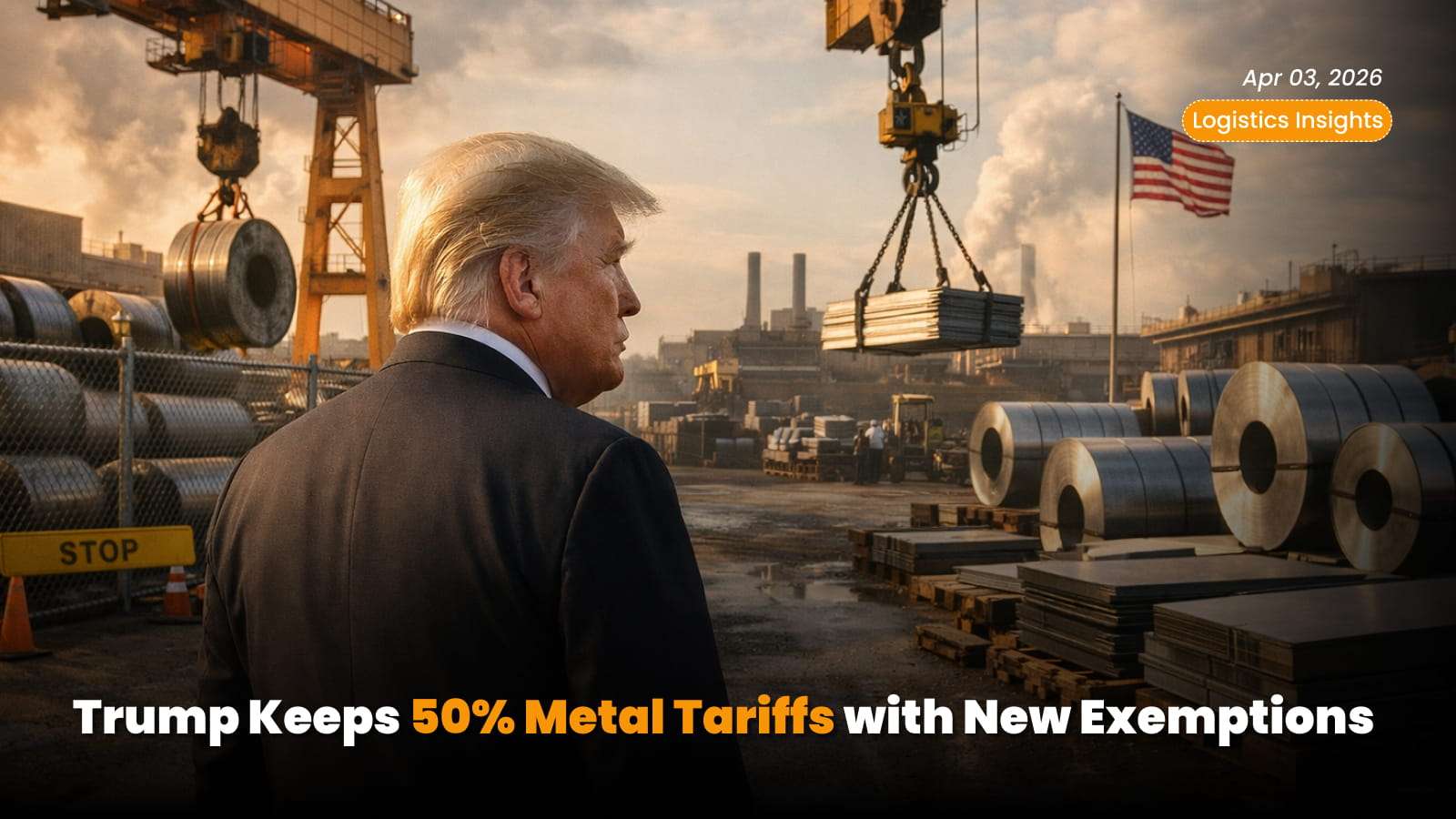
The administration of Donald Trump has confirmed it will continue enforcing 50% tariffs on a wide range of imported steel, aluminum, and copper products. At the same time, officials are introducing new exemptions to simplify the policy and reduce the burden on businesses.
According to a senior administration official, the updated framework is designed to make the tariff system easier to understand while improving fairness for companies affected by the current rules. The official spoke anonymously ahead of the formal announcement.
Under the revised policy, products containing less than 15% steel, aluminum, or copper will be exempt from these tariffs. In addition, certain goods that are considered to be “substantially made” of these metals will face a reduced tariff rate of 25%.
Products manufactured outside the United States but made entirely with American metals will be subject to a lower 10% tariff. Some metal-heavy industrial equipment and electrical grid equipment will carry a 15% tariff through 2027. This move is intended to support domestic manufacturing.
Despite these changes, a large number of imported goods will still face the full 50% tariff, including products such as steel pipes. The tariff will be calculated based on the total value of the product, not just its metal content.
After the announcement, Comex copper prices briefly increased by as much as 1.4% before falling back and closing 0.5% lower later in the day.
The policy update comes after months of pressure from businesses that argued earlier tariffs unfairly affected products containing only small amounts of metal. Previously, even items with minimal metal components were subject to full duties, which created challenges for manufacturers and importers.
These tariffs were introduced under Section 232 of the Trade Expansion Act of 1962. They are part of a broader trade strategy introduced during Trump’s second term. The goal is to encourage domestic production, expand access to foreign markets, and balance global trade.
Earlier this year, the U.S. Supreme Court struck down certain country-specific tariffs that were imposed using emergency powers. However, the administration has continued to pursue similar measures using different legal approaches.
In addition to metals, the administration has also announced tariffs on imported pharmaceuticals. Higher rates will apply to companies that do not manufacture in the United States or do not take steps to lower costs for American consumers.
Officials pointed to everyday items such as dental floss, which contains a small metal cutting edge, as examples of products that will benefit from the new exemptions. Washing machines are also expected to see relief under the revised policy.
The updated system may lead to higher duties for some imported goods, but it is expected to make compliance easier. Earlier, tariffs were calculated based on the exact metal content of products, which made them difficult to determine.
Supporters of the new approach believe it will strengthen U.S. manufacturing.
“This action will help ensure these tariffs function as intended to support domestic production and American workers,” said Jon Toomey, president of the Coalition for a Prosperous America.
With midterm elections approaching, economic issues such as rising costs and global tensions are likely to influence voters. However, administration officials have said the revised tariff system is unlikely to have a major impact on consumer prices.
The original 50% tariffs were introduced last year to address global overcapacity, particularly from China. These measures also affected major U.S. trading partners such as Canada, the European Union, Mexico, and South Korea. The policy was later expanded to include products that contain these metals.



Comments are closed